
Last article of 2025 - A Directional Update
Reflecting on 2025, and how this newsletter is changing going into 2026

This article is the last of 2025.
It’s an end-of-year note - a pause to reflect on the direction I’ll be taking next.
Over the past few weeks, I’ve been rethinking how I build, what I focus on, and what kind of work is worth compounding. Until now, this newsletter has explored the inner workings of AI from many angles. From low-level concepts to the tools and frameworks used to build AI systems in practice.
Some things are about to change.
Before getting into that, I want to start with a short story.
Not as inspiration, but as context.
Looking back from where I started to where I am, and connecting the dots, made me realize something about leverage.
Compounding Leverage
When I started my university studies in 2015, it was my first real break away from home. I picked a CS major, but didn’t have a laptop to work on or study on.
For the first four months, I worked 3 night shifts per week as a bill counter, where I unpacked cash bags, counted notes, scanned for damaged ones, and repackaged everything to be delivered to ATMs.
Not fulfilling or strategic work. But it solved the money problem for a bit.
The first thing I bought was an ASUS laptop that I spent around 1500 RON (~300 USD) on. That laptop was part reward, part requirement, as I could now learn and tinker with code past the CS Labs I had.
In 2017, the same pattern followed. I was fairly convinced at the time that I needed to buy a Mac, as I wanted to study Objective-C and Swift, and tinker with iOS applications.
Opportunity came, and I went to the US to work for the summer on a student J1 visa, thinking I could make a good amount of money.

Financially, it didn’t work out well as I didn’t come back with savings. I did come back with a refurbished MacBook Pro (13in, 2017), though. Next year, I will get my first full-time job as a programmer, working with Python, C++, and Computer Vision.
That’s how I entered the AI and ML world.
Why share this?
None of these steps was optimized. Night shifts made me skip classes and cut through the study time. The J1 summer didn’t pay off financially, and again, I could have spent that summer studying. But each decision quietly compounded my ability to explore, confidence, study, and move closer to things I cared about.
Direction mattered more than speed.
The New Direction
That baseline for this newsletter hasn’t changed. AI & Building AI Systems still stands solid.
What has changed is how wide the surface has become.
As I was looking through the archive and all the articles I’ve posted, I noticed that over time, the focus of this newsletter slowly expanded: from details on architecture and hardware, to tools, to frameworks, tips & tricks, and advanced low-level details.
I’ve covered GPUs, Neural Network Architectures, Programming Languages, AI Inference Frameworks, Engines, and AI Engineering concepts - but slowly diverged from the initial idea of building and shipping end-to-end, explaining along the way.
I’ve decided to do the opposite:
Reducing from the surface
Increasing depth, more practicality
Focusing on building and integrating AI
All the existing articles I’ve published still helped many of you understand how everything works, but less on how to connect the dots in a bigger system.
It’s the building systems around AI, rather than building AI around a system.
Most real-world environments are legacy systems that could benefit from AI, not greenfield agent platforms that replace everything overnight.
In practice, that often looks like small practical additions: a retrieval layer over internal docs, a vision model to filter large image datasets, a video summarization workflow, etc.
This is the layer I want to focus on.
To do that properly, I need to realign what I publish with what I actually want to build. That’s why I decided to get a fresh, ground-up look at everything I’ve shared here, and start aligning the pillars one by one.
Starting with changing the name.
A New Name: The AI Merge
The name Neural Bits was tightly coupled to the idea of byte-sized insights on AI.
Looking back, that description was only half accurate. Some articles were dense and technical, others were shorter and lighter reads - but from a reader’s perspective, I think most of them were seen as deep dives into individual components: a model, a framework, a piece of infrastructure.
There was another practical detail as well. A few months after starting the newsletter, I discovered that Neural Bits was already the name of a software development company in Mumbai. At the time, I chose not to change it as I focused on writing and learning, not branding.
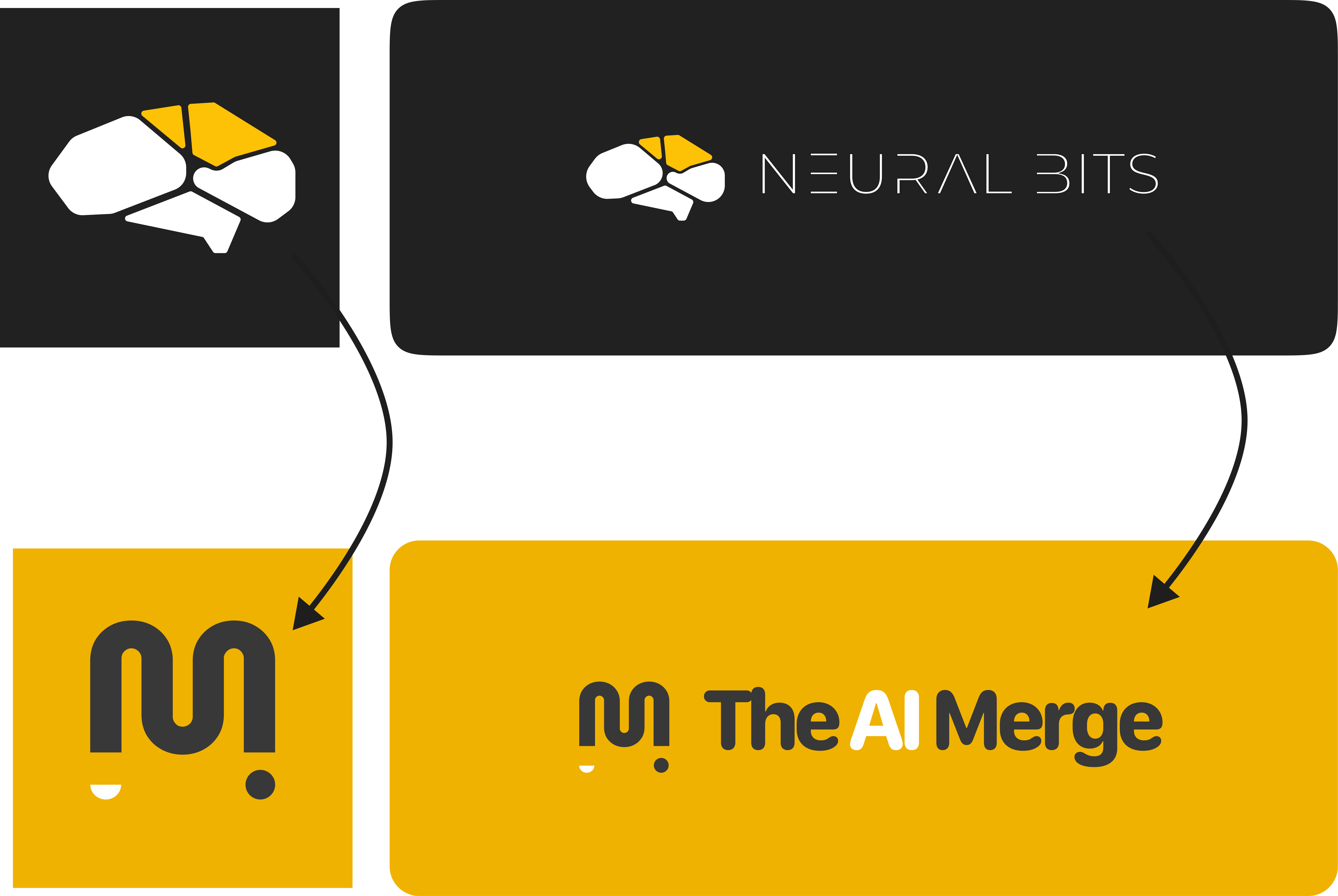
The AI Merge is closer to what I originally set out to do: build AI that fits into real systems, end to end.
The foundations I’ve written about - AI Engineering, Inference, Multimodal AI, LLMs, APIs, GPUs, optimization - still matter. They’re prerequisites. It’s easier to reason about monitoring when you understand inference patterns. It’s easier to deploy and optimize models when you understand the underlying infrastructure.
But the new focus will be more practical, on how AI merges into full systems.
That’s what the new name reflects.
A New Channel: Video
Some things are easier to understand when you can see them built.
A few months ago, I collaborated with a good friend, Miguel Otero Pedrido (from The Neural Maze), on a free course we called Kubrick: The Multimodal Agent. Until then, most of my work had been text-first, writing code and explaining it through articles.
Working on that course changed how I think about video content. Walking through code and design decisions step by step is a great way of teaching. Instead of describing what to build, we could show how and why things were built the way they were.
Many people who went through it reached out with questions and follow-ups, and others even scaled and built their own solution, following the same principles.
That feedback was really helpful. Because of that, I’ve started the YouTube channel.
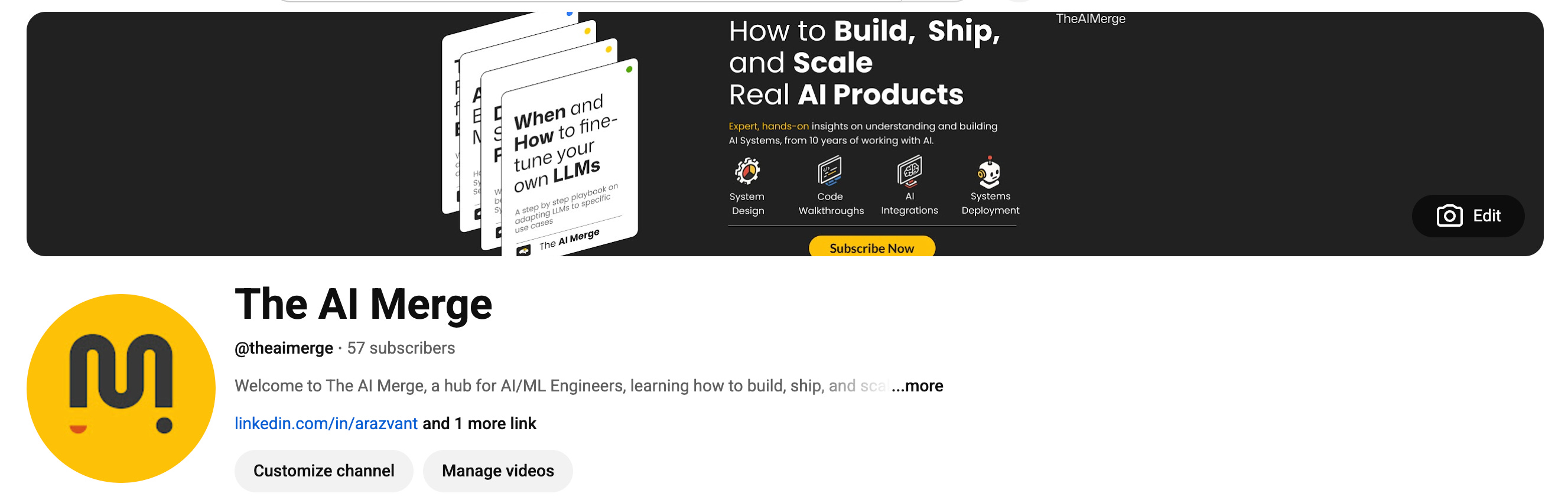
It will focus on longer-form walkthroughs: explaining System Design decisions, live coding and course walkthroughs, webinars, Q&A sessions, and more.
A New Platform: The Website
I’m working on building a strong reference point.
A place where I can present the projects and courses I’m working on, share a bit more context about my background, and keep the most important resources accessible in one place. It will also collect recordings, notes, and links to resources I’ve found useful along the way - things that are worth keeping an eye on, but don’t always fit into a single post or video.
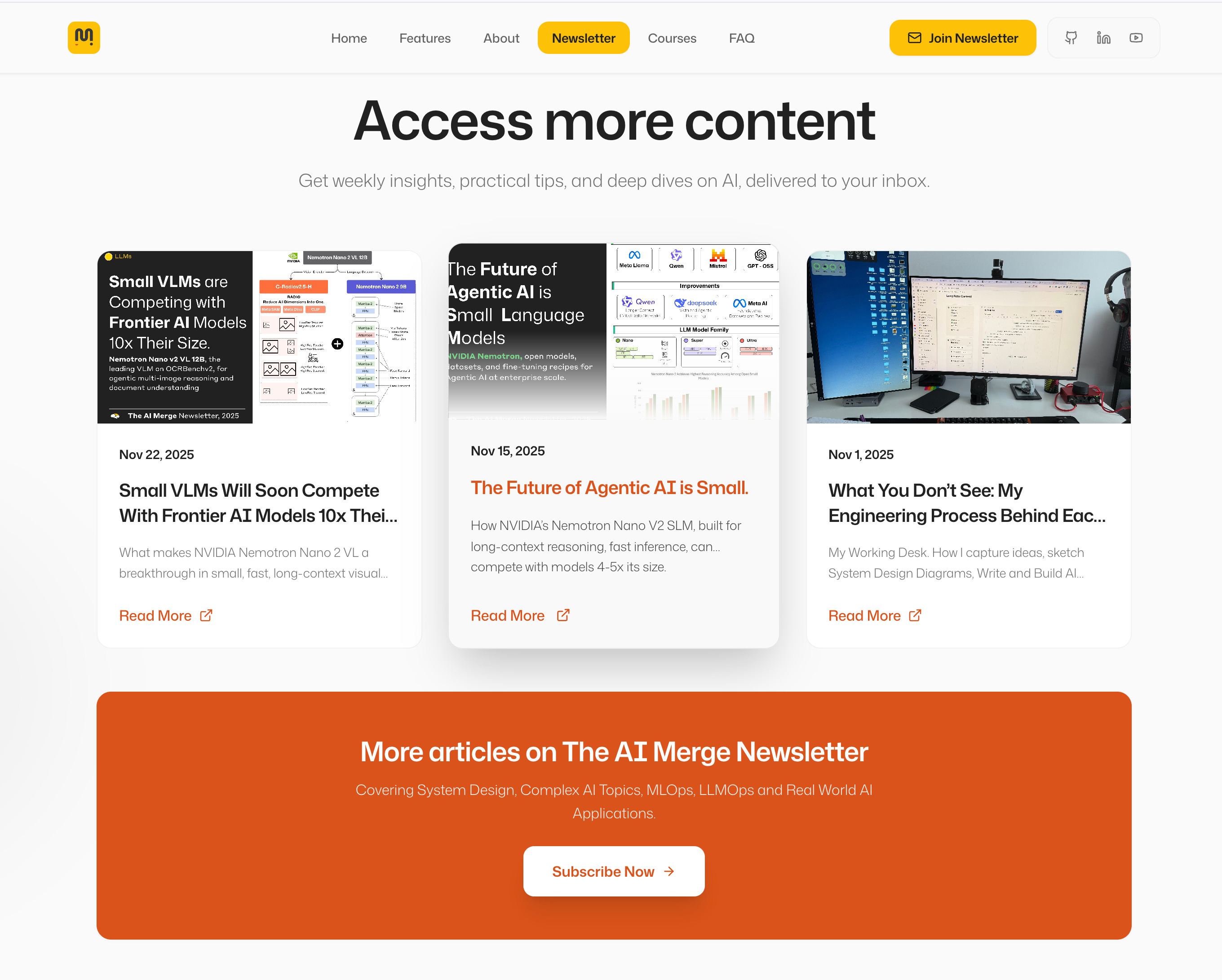
I envision it as a place you can come back to when you want an overview of what I’m working on, what’s available to learn from, how I can help you, and how the different pieces connect.
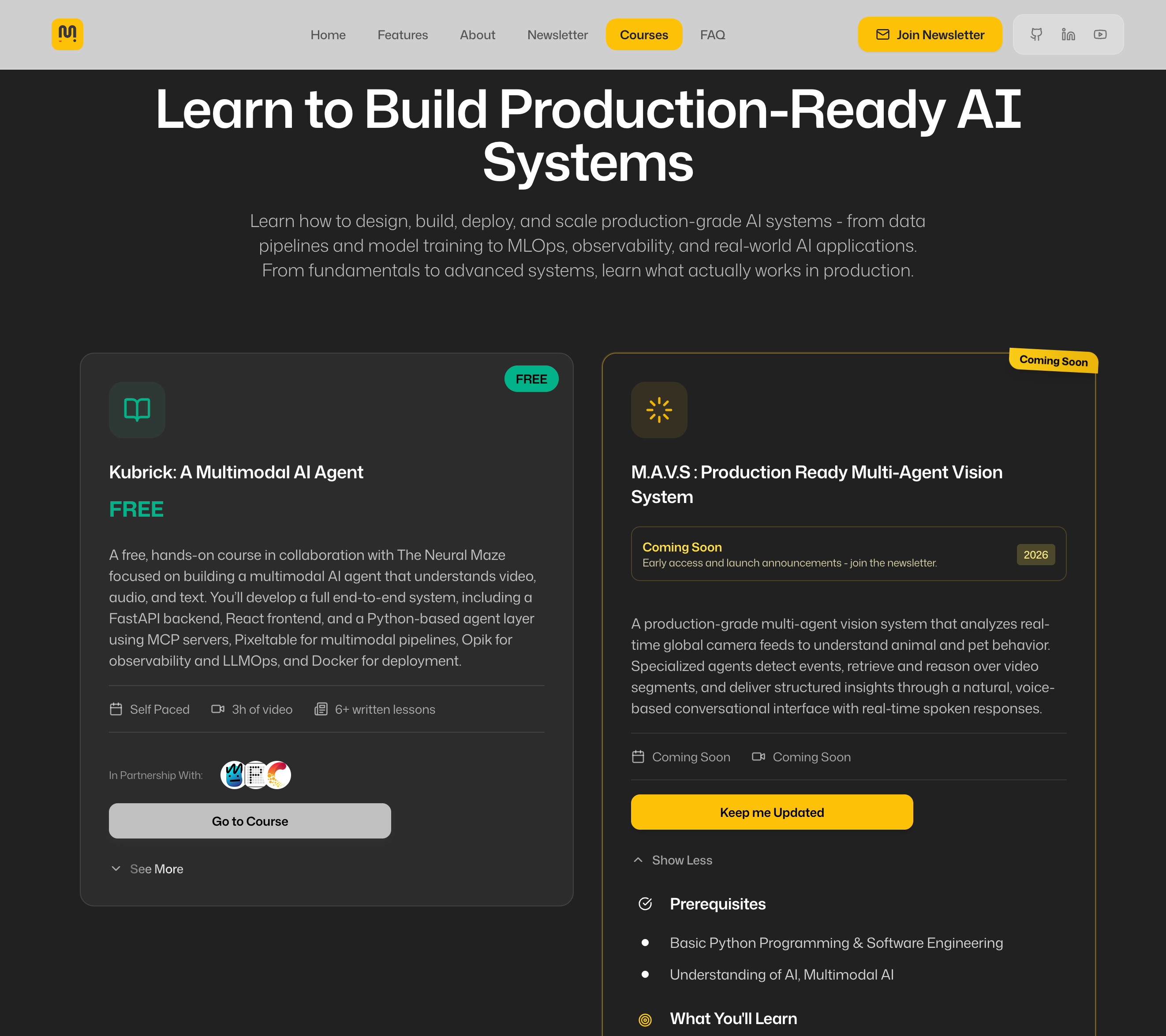
The website ties all the channels together. It provides a quick and strong intro to everything you could learn, build, and apply.
I’m rolling it out in 2026.
A note before the New Year
Before closing this out, thank you.
At the start of 2025, this newsletter had around 300 subscribers. Today, there are more than 7,300 of you learning along.
This year, we went deep - from GPU programming and AI inference, to frameworks, inference engines, AI Engineering topics, and building a free course that many of you extended on your own.
I also had the opportunity to work closely with NVIDIA and received a DGX Spark, which I’ll use to build and teach in public next year.
Going into 2026 with a clearer direction, new channels, live sessions, and end-to-end projects. Less surface, more systems.
Wishing you a great end of the year!
Looking forward to learning and building together in the next one.
This shift feels important to me. I'm happy to hear your thoughts.