

RAISE Summit 2026: What I Learned About AI, Robotics, Agents, and Infrastructure
Key takeaways from talks, demos, and conversations at RAISE and MACHINA conferences in Paris this year.

Earlier this month, from 7 to 10 July, I was in Paris for the RAISE and MACHINA Summit 2026, where I was invited as an ambassador.
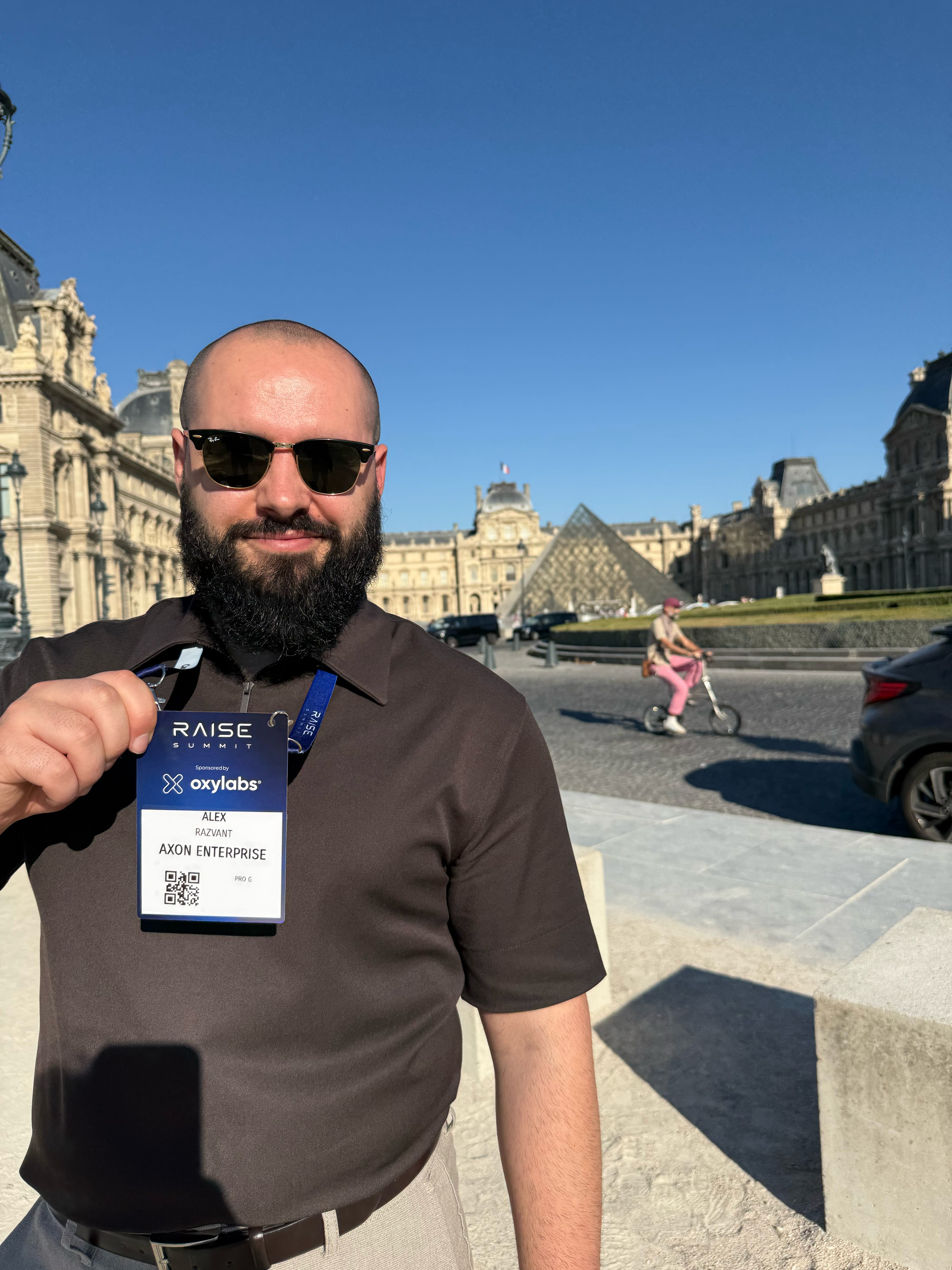
I didn’t expect to come back with a tan, but that’s another topic.
I finally got the time to gather all my notes, resources, recheck some of the talks, and write this article. So, here are my impressions and learnings from conversations I’ve had, and some important things I learned - especially about what I thought I already understood well, or had at least spent some time studying.
What are the RAISE and MACHINA Summits?
RAISE Summit and MACHINA were part of RAISE Week, a broader programme of AI conferences, workshops, private gatherings, and partner events, hosted in Paris, France.
MACHINA held its first edition this year, a one-day event focused entirely on robotics and embodied AI, and companies such as Boston Dynamics, NVIDIA, Google DeepMind, 1X, and Apptronik were represented on stage.
RAISE Summit at the Carousel du Louvre was the broader, flagship conference. For two days, RAISE covered the AI industry, from models and infrastructure to energy, enterprise adoption, production, and applications.
MACHINA Summit (say hi to this guy)
I landed in Paris on July 7 and reached Station F at around 1 PM. The event had started that morning, so I had already missed parts of it-including Jim Fan’s talk, one of the sessions I wanted to see.
I spent the afternoon at the booths and attending talks and keynotes. In the next sections, I’ll group my learnings and what I’ve found interesting, and worth keeping an eye on if you’re curious about Physical AI.
M1. World models and perception
Shortly put: “LLMs can be completely useless for perception”.
There’s a big difference between GenAI and Vision Language Models and the models robots need for perception and action, and that makes sense.
LLMs work with discrete symbols, while robots have to process continuous sensor signals and predict what will happen after an action.
I remember in 2018, I was working with ROS, Python/C++, RC Cars, Monocular Depth and Velodyne LiDAR sensors, building prototypes for self-driving algorithms with and A* path planning.
But the Computer Vision and the heuristics I was using back then, are completely different from what we have today.
Even though I missed Jim Fan’s talk at MACHINA, I’ve watched his similar talk at Sequoia Capital. He mentioned that VLAs (Vision Language Action) models still lean too heavily on language.
If you think about how VLMs (Vision Language Models) work today, they can encode knowledge and objects in the shared latent space of the model, but are weaker at physics and movement actions and commands. For robotics, this is mandatory.
The new trend now seems to be WAMs (World Action Models). WAMs learn by predicting what will happen next in the physical world and connect those predictions to actions.
Interestingly enough, the concept of WAMs ties in with the talk that Yan LeCun gave at RAISE, covering JEPA models. I’ll cover that one in the following chapter, but to summarize:
V-JEPA models are learning by autoregressively predicting what happens in a masked video, not relying on language at all. Parts of the video are hidden, then an encoder processes visible frames and predicts embeddings of the hidden regions.
That way, the model learns about physics, objects, motion and unpredictable visual details.
M2. Robots in full Production
One other theme I’ve caught is that the field of robotics is moving from lab demos to performing industrial work. Someone in the panel of a talk I’ve attended referred to the old ways of research environments as “nerd paradise” - once you got the robot out of the lab, nothing worked anymore.
Think of a Roomba Vacuum. Keep it inside your house, and it maps the rooms nicely. Put it outside, and nothing works anymore.
Boston Dynamics is commercializing its electric Atlas humanoid. Path Robotics reported 15x revenue growth by automating welding and reducing the manual welding time per chassis from 150h to 13h, and Agility Robotics is deploying Digit to move objects through narrow spaces and handle workflows that people previously did.
In Physical AI and Perception, we didn’t have a breakthrough similar to 2017 for LLMs with the Transformers architecture.
But this year is seen as the pregame and 2027 as a potential breakout year for physical AI, even though most of the examples were already about customers, revenue, factories, welding, and warehouse work.
M3. Data required for robotics
Because physical AI data is not available on the internet in the same way as text and images are, one interesting theme at MACHINA was focused on data factories and video-to-action learning.
Although we have tons of videos, they don’t quite represent the format a robot needs for training. Robots need data that capture actions, forces, and real-world interactions. Here are a few examples:
Apptronik’s Robot Park has a 90,000-square-foot facility where Apollo 2 robots collect training data across logistics, manufacturing, and retail tasks.
Another approach, using web data, was presented by Rhoda AI, which pre-trains on web-scale video, predicts how a task should unfold as future video frames, and uses an inverse-dynamics model to translate those predictions into robot actions several times per second.
NEURA Robotics’ robots combine vision, voice, touch, actuators, and on-device processing to respond in real time.
Physical AI is a different game compared to the online or edge applications we’re building. A robot has to interpret a task, understand its surroundings, plan, and execute a motion. It has to react within milliseconds, stay balanced, respect joint limits, manage its battery, etc.
With all of that, I think Jim Fan’s quote here fits well to close this section for MACHINA:
“Our generation was born too late to explore the Earth.
Too late to explore the stars.
But we’re just in time to solve robotics”


RAISE Summit 2026
I don’t have a video of a robot waving at you this time, but I did come back with plenty of notes and takeaways from across the AI landscape, starting with energy and infrastructure to models and applications.
First, and not in a sponsor-ish way, the event was well organized. The RAISE Week app was especially useful: I could save the talks, plan my schedule, and connect with other attendees.
Every dot on the map above represents a company booth. I visited 32 of them and still got a few left.
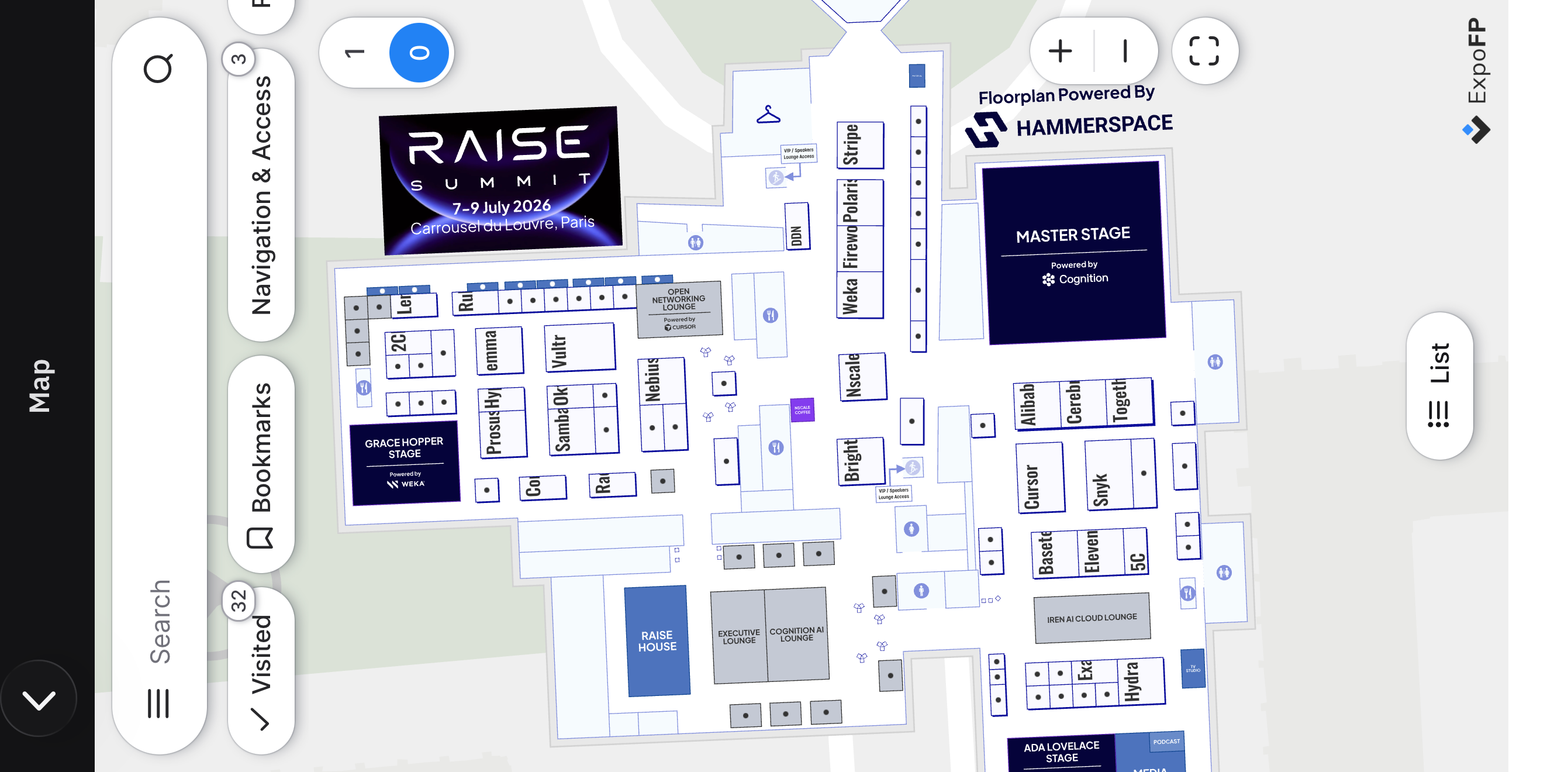
For RAISE, there were 3 stages: Master, Grace Blackwell, and Ada Lovelace.
If at MACHINA, I had been listening to talks about perception data, sensors, data factories, and robots working near people.
At RAISE, the talks covered chips, infrastructure, production serving, evaluation, security, and enterprise adoption, so I’ll group them into sections.
R1: Progress and forecasting of AI
I’ll start with a conversation I had with Mark, who is a VC Consultant.
We’ve been chatting about how fast AI goes, and how, amongst all the resources he uses for market research, he’s been following the “AI doomers” on X, who keep saying that AI is going to replace everything. Then he asked me how I thought about it, from an engineering perspective as someone closely working in AI.
One thing Mark said was “how tricky it has become to advise, and create investment plans about AI nowadays”.
We’ve talked about MIT, Gartner, and similar reports for 2025/2026 on AI adoption at a larger scale than what big labs are advocating for. Data doesn’t lie, and adoption and execution are still a problem, regardless of breakthroughs.
New models create demand for more compute. Compute needs power and cooling, and data centres need grid connections and construction capacity.
These things aren’t cheap, or easy to build either, yet they power all AI.
R2: Interesting chats I’ve had at company stands
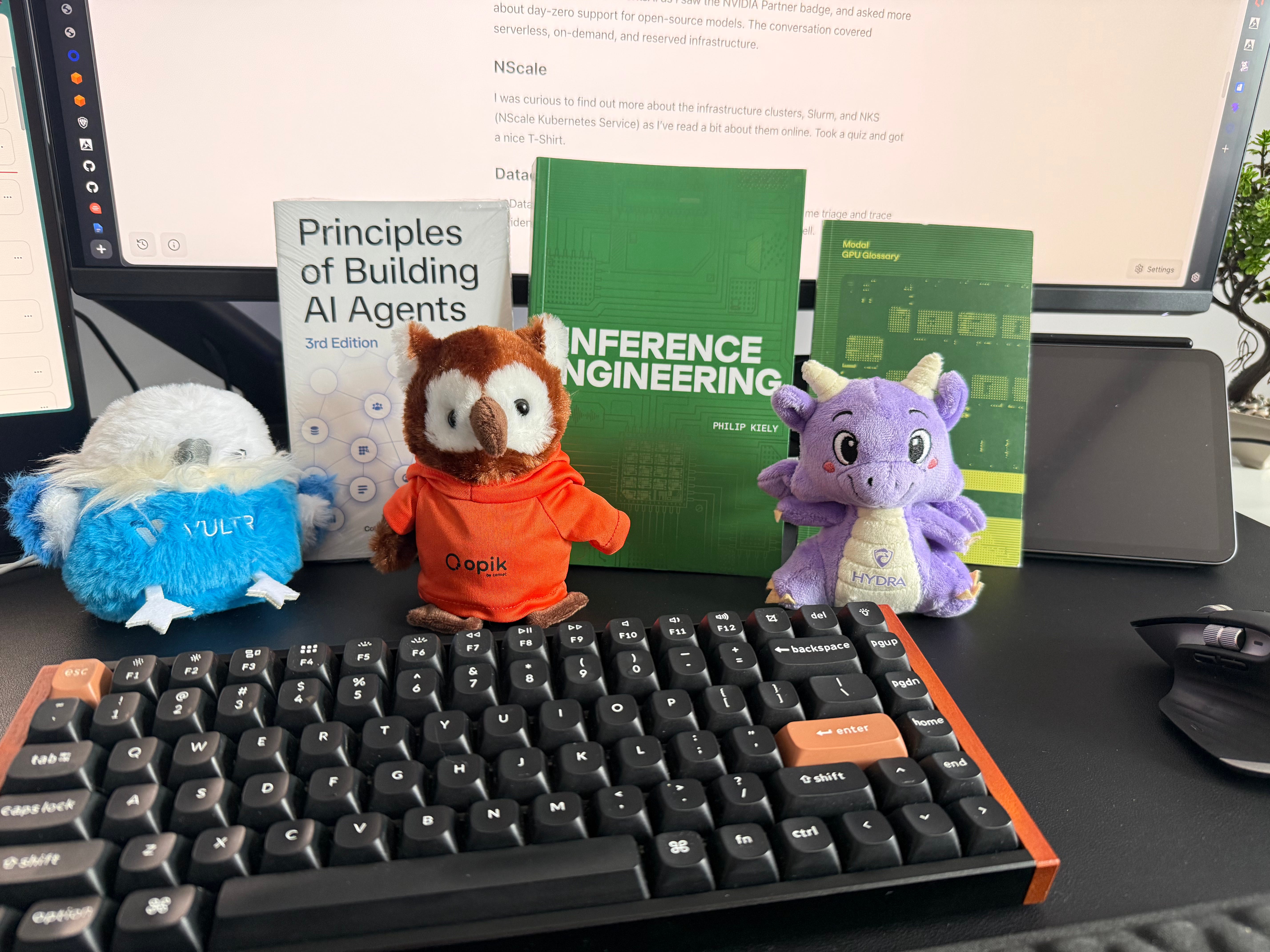
I’ll list a few in no particular order, and then attach some images at the end of this section.
Modal
On the first day, I went to Modal’s booth. I instantly remembered seeing and using their GPU Glossary online to learn about GPUs, as part of building AI Atlas. I took two copies of the glossary and a map showing the layout inside a GPU chip. We also talked about my experience with the serving layer for AI workloads, including NVIDIA Triton Server and vLLM on their platform.
Baseten
Baseten is where I spend a bit more time, talking about how to provision and serve DeepSeek, Nemotron-3-Ultra, Speech, Multimodal, and other big OSS models under real-world traffic.
They gave me a copy of Inference Engineering, and I read some chapters during my flight home.
Opik
At Opik’s booth, I chatted about my experience using Opik in my projects, and their integrations with Langsmith and Pydantic Logfire (I’ve used PydanticAI + Logfire in my one of my projects, but ended up routing traces to Opik). We talked about evals, versioning, evaluation datasets, LLM-as-a-Judge, and tracing multimodal spans.
I’ve also found out about Ollie, their integrated AI Assistant that helps with tracing, evals, datasets, and pretty much everything inside the Opik dashboard.
Vultr
I didn’t know that much about Vultr, but learned more after a talk. At their booth, I chatted about Edge AI and IoT AI workloads, and infrastructure needed for distributed fleets of devices plus the complexity of keeping those fleets running.
FrameworksAI
I also stopped at FrameworksAI as I saw the NVIDIA Partner badge, and asked more about day-zero support for open-source models. The conversation covered serverless, on-demand, and reserved infrastructure.
NScale
I was curious to find out more about the infrastructure clusters, Slurm, and NKS (NScale Kubernetes Service) as I’ve read a bit about them online. Took a quiz and got a nice T-Shirt.
Datadog
At Datadog, I found more about the integrated Bits Agent, which I’ve used to help me triage incidents/bugs faster, starting from alerts, or just using RUM events and custom panels to aggregate logs and metrics in the same place.
Worth knowing
Modal when you want to run custom Python, GPU jobs, or your own inference stack without managing the underlying cluster.
Baseten when you already have a model and want to deploy it as a production API with managed scaling and serving infrastructure.
Opik when you need to trace, evaluate, and compare RAG, agent, or other multi-step LLM workflows.
Vultr when you need general-purpose cloud, GPU, or Kubernetes infrastructure across multiple regions, including for the cloud side of Edge AI systems.
Fireworks AI when you want to serve or evaluate open models without managing the inference engine or GPU fleet yourself.
NScale when you need access to larger GPU clusters for training, batch workloads, or dedicated inference infrastructure.
Hardware Booths (Supermicro, Cerebras)
Stopped by Cerebras’s booth to see the WSE3 (Wafer Scale Engine 3) in its real shape and size, and their CS3 cluster.
Supermicro had the B300 8x HGX block and the AMD Helios AI Node.


R3: Agents and Inference demand
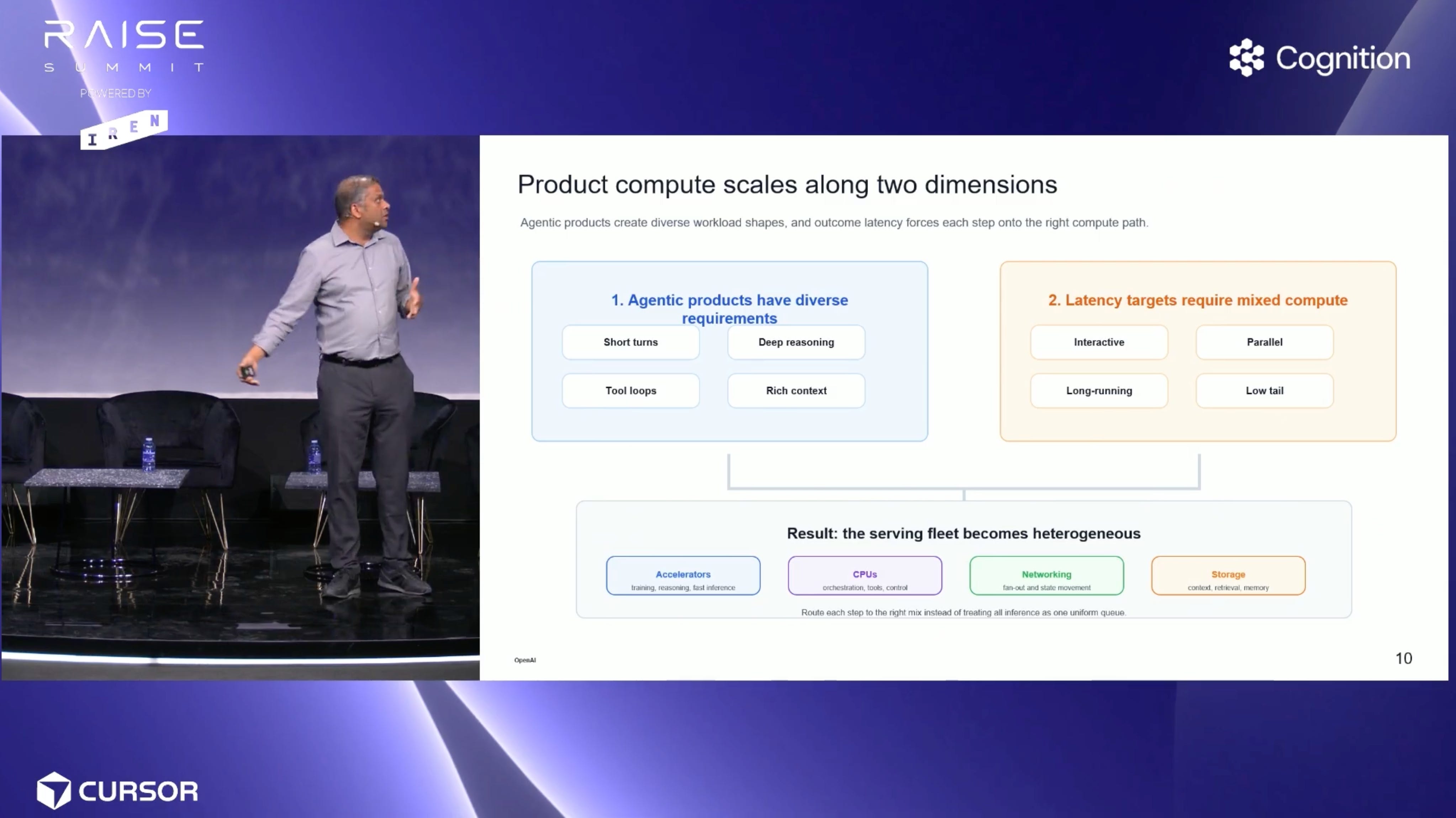
In his session, Katti mentioned that token usage among OpenAI researchers had grown almost 50 times within a few months, and Codex has become the standard default in the company (which is expected).
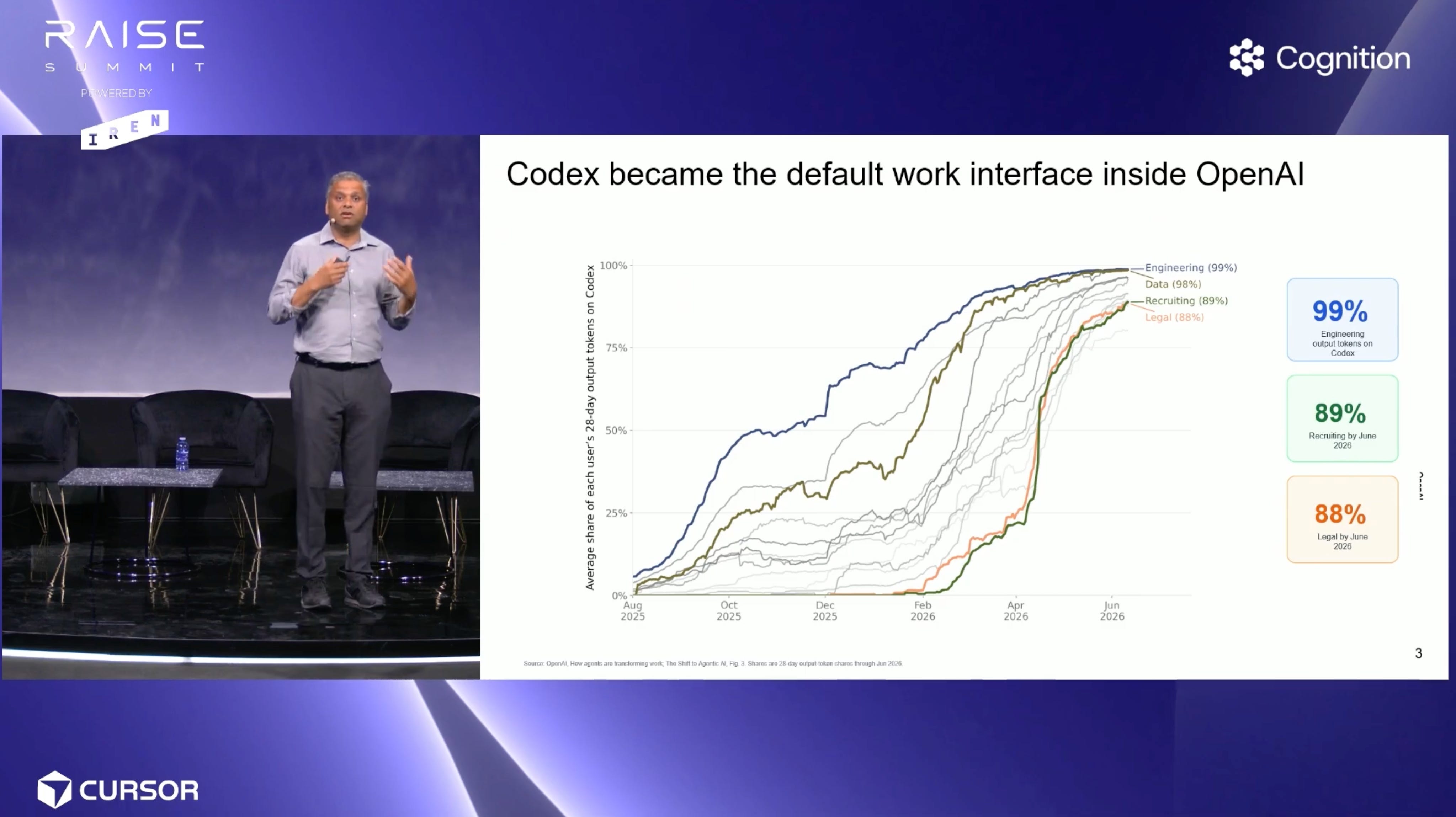
Also, with agents becoming more capable of running long tasks, compute scales differently now. One pathway depends on quick interactive responsiveness, another one depends on mixed compute, task success rate, and completion time.
TTFT (time-to-first-token) is less useful when a task takes ~20 min and makes many tool calls. The useful measures here are completion time and task success rate. A longer run also uses CPUs, storage, and networking for orchestration, memory, and data movement.
In both approaches, flow spans through model planning, calling tools, inspecting results, and continuing until a task is complete.
Also on this topic, Crusoe presented what they called “Memory Alloy,” which is a distributed caching layer that “stitches together” HBM, DRAM, NVMe, and object storage to allow systems to look up tokens in the cache over a larger area, a use case which applies well to AI Agents.
R4: HBM, GPUs, Copper and Optics
On the Grace Hopper stage, there was a panel talk featuring SK Hynix (who builds memory circuits) on the “memory wall”. A good note I got is that HBM3 leads the industry standard for GPUs in AI.
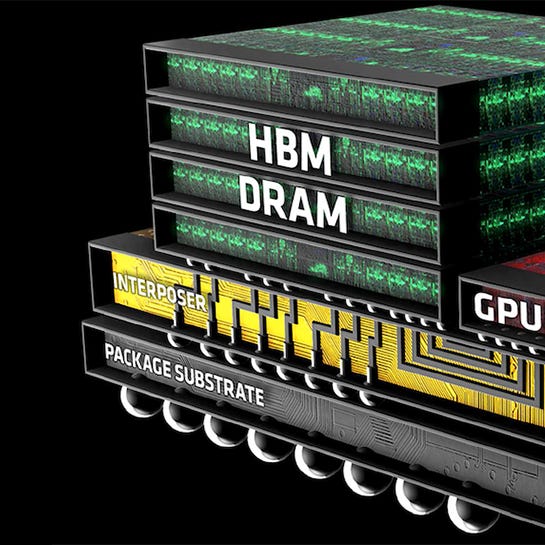
However, Pat Gelsinger (former Intel CEO) said that HBM is a “lousy memory”, as basically HBM is fundamentally stacking DRAM and creates a “thermal sandwich” that is power-inefficient and difficult to cool. It is also manufacturing-intensive, as an HBM stack can take up to 3x the time to build compared to DRAM.
Because a single defect in any of the 12 to 16 stacked layers ruins the entire stack, the factory can produce 3-4x less output for HBM than for standard DRAM.
Since HBM is stacked DRAM connected with TSVs (through-silicon vias, small ‘wires’), to limit the “shoreline bandwidth” of these point-to-point connections, the industry is moving toward optical interconnects (lasers) and stacked memory integrated directly on top of compute using hybrid bonding, instead of next to the chip, but part of the same package (as it is in current GPUs).
R5: Production AI
Since the article is already large, I’ll speed-run through the next learnings I’ve got.
“Too fast to write code, too slow to review it”
Manoj Nair from Snyk mentioned that internal data from 4,800 of their customers showed a 108%+ increase in security vulnerabilities over one year. He mentioned that now, with the speed of generated code, teams can produce it faster than people can review it, so security debt grows with the volume of output.
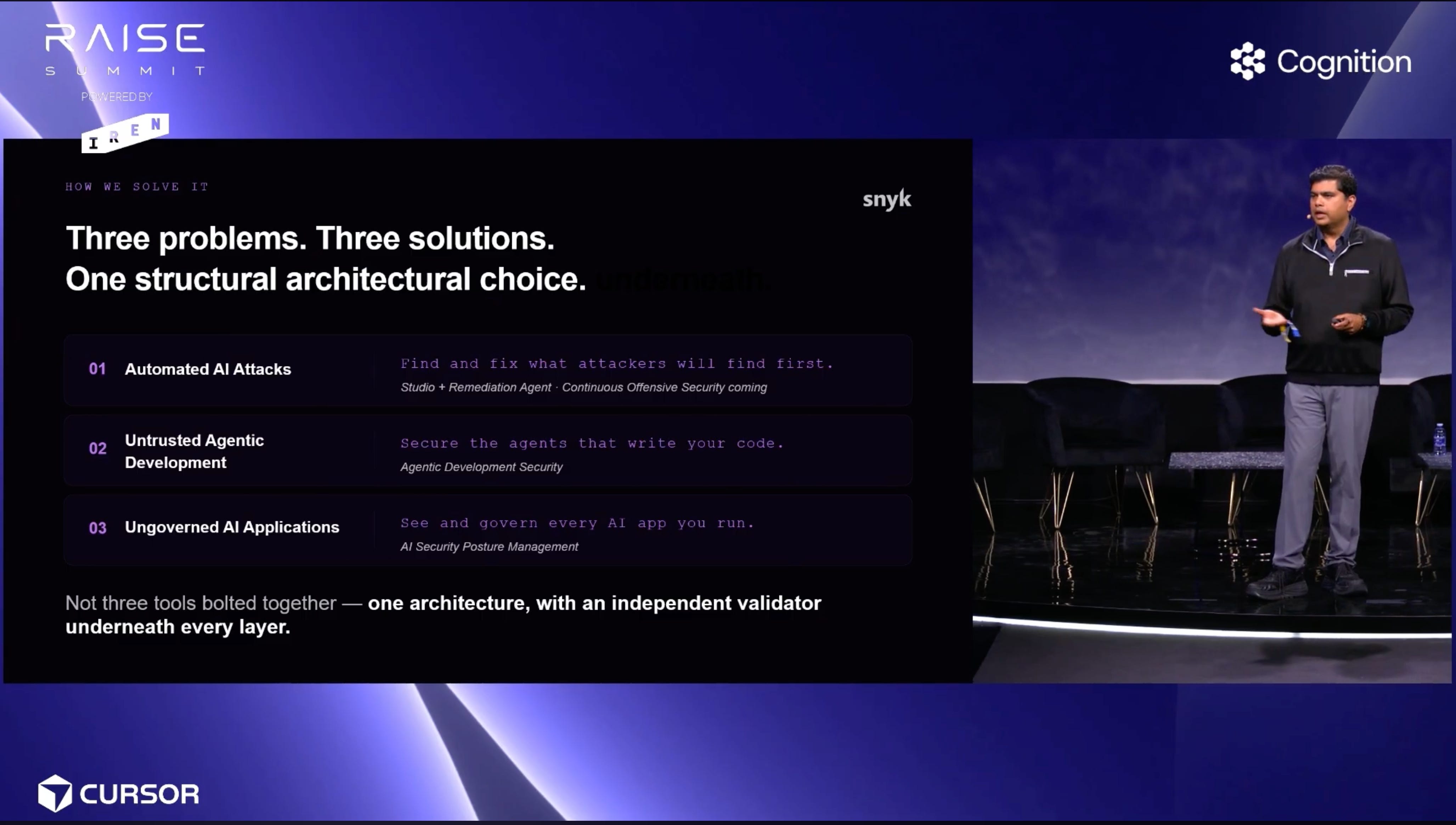
Plus, MCP servers, skills, plugins, shell commands, and network calls all become part of the surface to review.
“Open-weight models in enterprise”
Especially with open models now ranking high on benchmarks (GLM, Kimi, Qwen, Nemotron), some companies are looking into control they can give teams over cost, deployment, and data.
More importantly, enterprises are using open weights to protect their IP, as they are reluctant to send proprietary business processes and data to frontier labs that may eventually become competitors.
Since Anthropic rolled-out Fable 5, Enterprise plans requires mandatory 30-day data retention for prompts and outputs to run safety classifiers.
R6: AGI and World Models (Yann LeCun)
The first question in the Chat thread I’ve opened was about AGI (😄, Santhanalakshmi).
Not that much talk around AGI, but the fireside chat with Yann LeCun was the cherry on top for me, mainly because I’ve been following the I-JEPA and V-JEPA (Joint-Embedding Predictive Architecture) models that AMI Labs (Yann LeCun’s lab) works on.
The main idea I’ve got there was that the current industry is focusing too much on scaling LLMs, which has reached a point of diminishing returns for the physical world.
LLMs and Handling Discrete Symbols
In the MACHINA section, I’ve covered Jim Fan’s (NVIDIA) talk on WAMs (World Action Models) and how LLMs, VLMs, VLAs, or any model that focuses purely on language to reason about video is pretty much useless.
The same idea was enforced in this talk. LLMs can pass bar exams or write code, but are useless when it comes to real-world signals like video and sensor data. LLMs learn from textual descriptions of the world rather than the world itself.
Predicting every Pixel is useless
The world is largely unpredictable at the pixel level. Instead of trying to predict every detail or pixel, JEPA constructs an abstract representation of reality and makes predictions within that space, filtering out unpredictable noise. This allows the AI to develop “common sense” and predict the physical consequences of its actions.
The ultimate goal is to develop World Models
Mental representations that allow a machine to plan a sequence of actions to accomplish a task through Model Predictive Control (MPC). Much like a baby learning about gravity over nine months of observation, these models are trained on video data, which is far more abundant and redundant than text.
Project Tapestry and Sovereign AI (I didn’t know about this)
He believes that while the race for LLM platforms has largely been lost to a few Silicon Valley and Chinese firms, the race for Physical AI is just starting. Project Tapestry is a bottom-up, distributed training initiative. This allows nations, universities, and private entities to contribute to a massive foundation model using their own data and compute without ever having to share the raw data itself, thus maintaining sovereignty while building a superior global model.
The talk ended with the idea that AI systems will never be useful until they can understand and predict the physical consequences of their actions.
You can view the entire presentation here.
Ending Thoughts
I still have sketches and notes on my iPad, and sessions that I’ve missed and bookmarked to see on YouTube later, but this article has already grown to a very long one, so I’ll share my ending impressions and thoughts.
Maybe I’ll write more distilled and targeted versions on key topics I care about.
I am grateful to have been invited to RAISE as an ambassador. After 2 full days of discussions, panels, and fireside chats, I left with more concrete examples of where the industry is moving, where the gaps are, and with a better sense of what I still need to learn.
Thank you for reading!
Before you leave
A lot of the topics in this article - AI infrastructure, hardware, inference, agents are also part of something I’ve been building over the past months.
AI Atlas is my animated visual guide to how modern AI systems work, from hardware, chips, and training to inference and real-world applications.
I’m still working on it, but you can join the waitlist below, and I’ll send updates on its progress and launch date.

References (Videos)
RAISE Summit - Full Day Master Stage Recordings
RAISE Summit - Full Day Grace Hopper Stage Recordings
RAISE Summit - Full Day Ada Lovelace Stage Recordings
Katti, S. (2026). Agents are here. Compute has to change Video. YouTube.
LeCun, Y. (2022). A path towards autonomous machine intelligence. OpenReview. https://openreview.net/pdf?id=BZ5a1r-kVsf
LeCun, Y. (2026). Fireside chat with Yann LeCun Video. YouTube.
Lochmiller, C. (2026). Crusoe’s energy-first vision Video. YouTube.
Nair, M. (2026). Agentic development security Video. YouTube.
Ong, I., Almahairi, A., Wu, V., Chiang, W.-L., Wu, T., Gonzalez, J. E., Kadous, M. W., & Stoica, I. (2025). RouteLLM: Learning to route LLMs with preference data. International Conference on Learning Representations. https://openreview.net/pdf?id=8sSqNntaMr
Sequoia Capital. (2026, April 30). Robotics’ end game: Nvidia’s Jim Fan Video. YouTube.